
Oh wait, is Microsoft quietly moving my data outside the EU?
Ok, let’s be honest. That headline is slightly dramatic. But there’s enough truth in it to warrant putting down your coffee and paying attention for two minutes. Because Microsoft flipped a switch, and most European organisations won’t notice until it’s too late.
Here’s what happened: Two settings, both on by default
Microsoft recently announced two changes through its Message Center, and both of them break with something that EU-based IT teams had quietly gotten used to: the assumption that anything sensitive to data residency would be off by default. When Anthropic was first added as a Microsoft subprocessor, for instance, the relevant toggles were off for EU and EFTA countries by default. The message back then was clear: we know you have regulatory obligations, so we will not put you at risk without your explicit consent. That approach now seems to be changing.
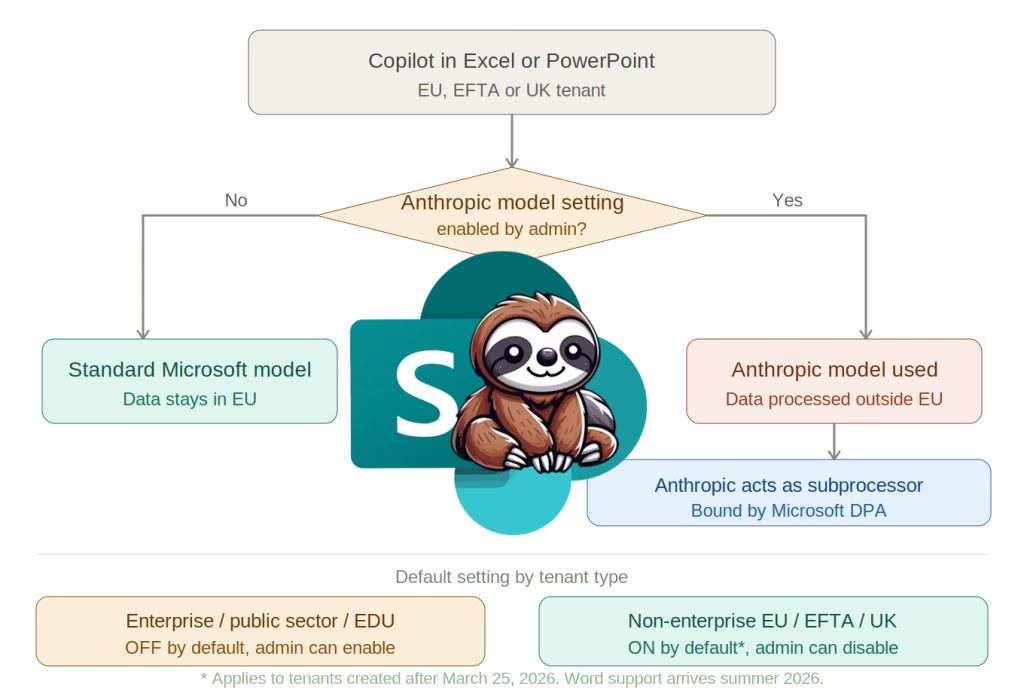
One important nuance: for government, education and enterprise tenants, the Anthropic model integration remains off by default and is opt-in only, including flex-routing. Regardless of your tenant type, it is always worth opening the admin center and verifying both settings yourself. Never assume.
The first change is Flex Routing, arriving from April 17. What is that? Well, it means that during peak usage moments (think a Monday morning when half of Europe simultaneously asks Copilot to prepare them for their week) your prompt can be sent to a Microsoft data centre outside the EU. And not just your prompt. This happens at the inferencing level. That is the stage where the AI model actually generates a response, and by that point, organisational data like emails, files, metadata and system prompts has already been bundled together and is being processed by the model. Microsoft promises the data stays encrypted and is not stored, and that only pseudonymized data (things like session IDs and timestamps) might be retained outside the EU boundary. Fine. But still, you’d rather keep all of that inside the EU.
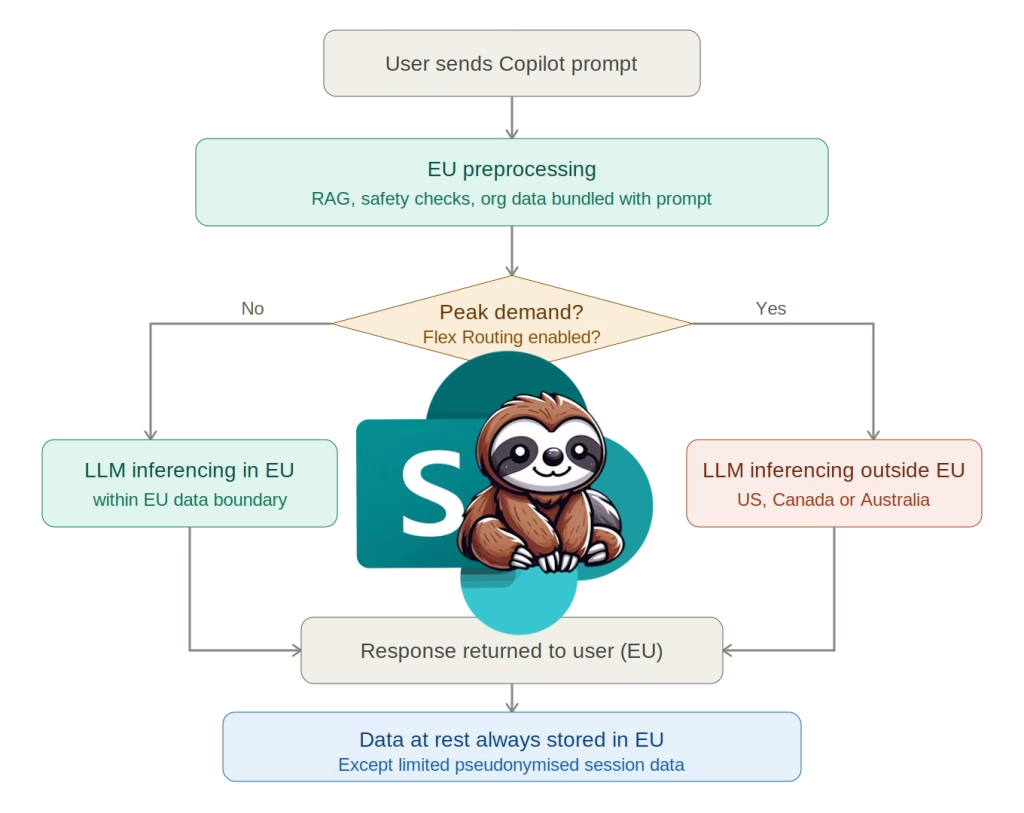
The second change arrives May 4: Anthropic models becoming the default for Copilot in Word, Excel, and PowerPoint. This is what enables Copilot to generate the kind of polished output you’d expect from Claude: structured documents, rich formatting, smarter drafting. Great feature. But the data processing situation is the same as with Flex Routing. Meaning: same concern, same fix needed.
Why this actually matters for European organisations
The entire promise of the EU data boundary is straightforward: your data stays in the EU. Once a feature quietly overrides that guarantee during a busy morning, compliance teams have a real problem. And it is not just a theoretical one.
If Flex Routing is active and a data subject files a complaint, your organisation needs to demonstrate where and when their data was processed, and by whom. That is GDPR territory. And I won’t pretend like I know everything about GDPR, I don’t, except that pseudonymized data isn’t fully GDPR proof. Cross-border data transfers without proper legal basis, or without informing data subjects, can expose organisations to significant risk regardless of whether they are based in the Netherlands, Germany, France, or anywhere else in the EU.
What makes this harder is the practical reality of keeping up. Even if you customise your Message Center messages and build a whole workflow to keep up to date, priorities shift and announcements get buried. And some changes skip the Message Center entirely.
What to do right now
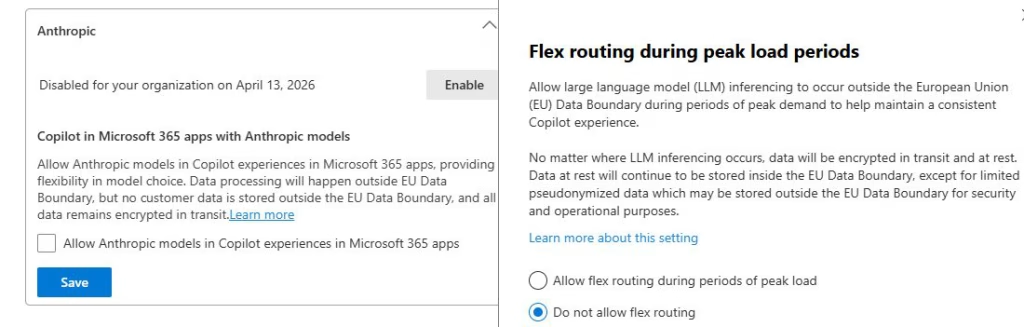
Go to the Microsoft 365 Admin Center > Copilot > Settings. That is where both toggles live. Review whether Flex Routing and the Anthropic model integration are enabled, and decide whether that aligns with your organisation’s data processing agreements and policies. If it doesn’t, turn them off. The deadline for Flex Routing is April 17, and after that, if you have not acted, it is simply on. For Anthropic models in Copilot in Word, Excel and PowerPoint the deadline is May 4.
The broader point here is not that Microsoft is doing something malicious. Flex Routing exists for a reason: it prevents Copilot from grinding to a halt when demand spikes. And Anthropic models genuinely improve output quality. But the shift to default-on for features that affect data residency changes the relationship between cloud provider and enterprise customer in a meaningful way.
You can no longer assume that regulatory safeguards are baked into the defaults. Every Message Center post is now a potential compliance event. Treat it that way.
And if you are advising other organisations in your network, flag this now. The most dangerous compliance risk is the one nobody noticed had been turned on.